

Self-regulation
 "Selbstregulierung ist das, was Selbstkontrolle möglich und oft unnötig macht." Prof. Stuart Shanker
Self-regulation
- Machen Sie sich Sorgen, weil Ihr Kind so schnell ausrastet, - und Sie selber auch?
- Do you wish someone could show you how to help your child become more regulated?
- Are you trying to understand the difference between self-regulation and self-control?
Self-regulation means recognizing how it feels to be calm, or to feel stressed. These are psychophysiological responses to stress that can be either health-promoting or growth-inhibiting. We all self-regulate, albeit sometimes in inappropriate ways, i.e. so it may not help us recover from stress, or may lead to even greater stress. Adaptive (effective and helpful) self-regulation promotes growth and learning and helps us to recover from stress. Self-regulation is about understanding feelings, thoughts, and behaviors, our own and those of others, not controlling, suppressing, or managing them.
Self-Regulation is not the same as Self-Control
Self-control means suppressing disturbing impulses. Self-regulation is fundamentally different from self-control: Self-regulation aims to reduce disturbing impulses by understanding and tuning into the underlying feelings, not by suppressing them. Effective self-regulation reduces the stress-related feelings that lead to impulsivity.
"A constant fight-flight state creates a desire to feel safe and secure." Prof. Stuart Shanker
'Wenn wir dem Kind 'unsere Ruhe geben' wollen, müssen wir zunächst unseren eigenen Stress verstehen und wissen, wie wir unsere eigene Energie und Anspannung steuern können.'
Stuart Shanker
Keep asking yourself:
Am I being co-escalating, or co-regulating?
When HIS storm meets OUR calm, - that is Co-Regulation !
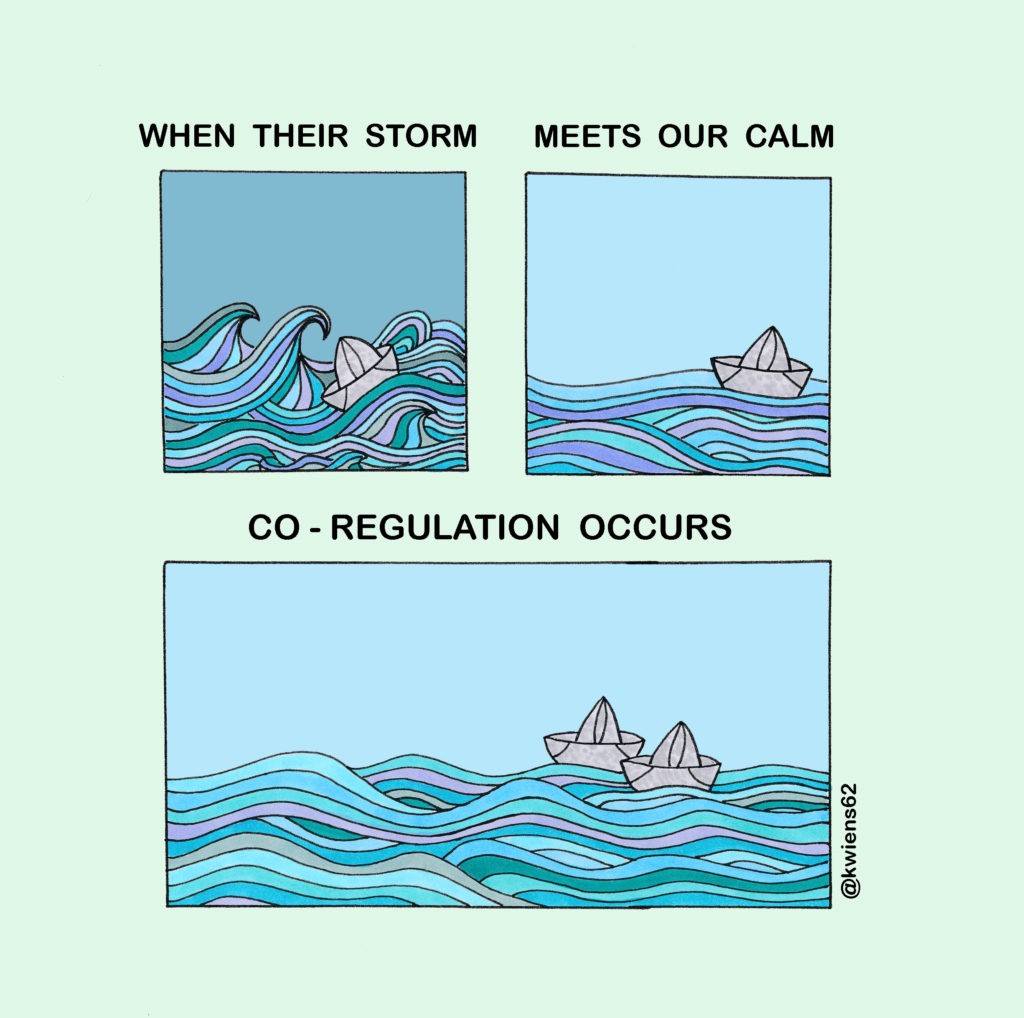
Self-regulation develops through co-regulation
For this purpose the adult must
- Learn to recognize the signs that the child is stressed
- Identify the stressors
- Reduce the stressors
- Help the child to recognize and distinguish between what it feels like to be calm, and what it feels like to be agitated
- Help the child find strategies to return to a balanced calm state when stressed
Infographics on this page by Kristin Wiens of North Star Paths
