


Floortime
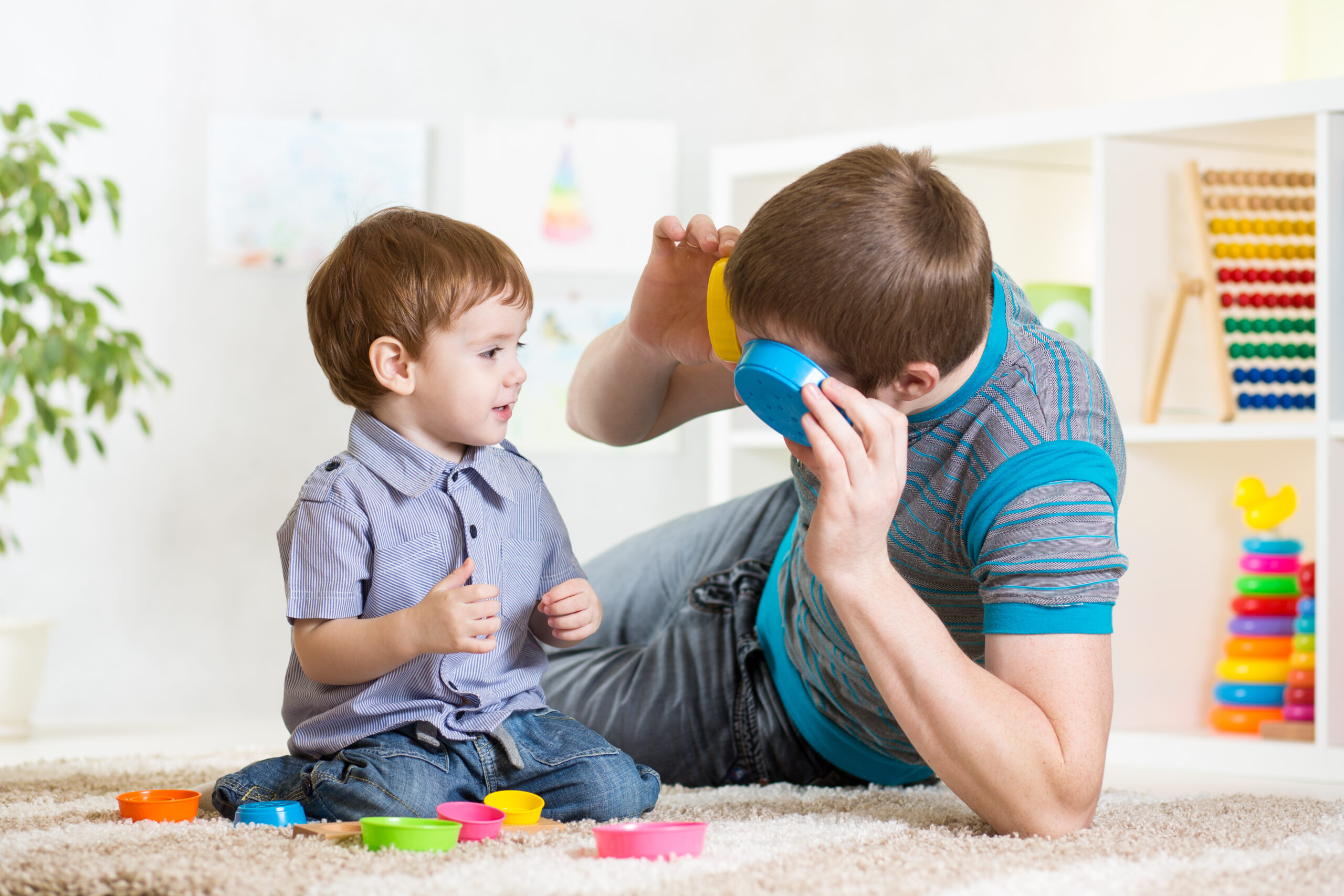
Playful Interaction: DIR - Floortime - PLAY
Building relationships through emotionally sensitive and playful interaction
- Are you worried because your child is still not talking, and hard to reach emotionally?
- Do you wish someone could show you, how to have fun with your child and how to reach him emotionally, instead of focusing on getting a diagnosis?
- Are you looking for alternatives to Applied Behavior Analysis (ABA), that are based on a play-based developmental approach?
D - I - R
stands for Developmental - Individual-difference - Relationship-based and describes an individualized relationship-based developmental approach to understanding mental-emotional development
D - Entwicklungs-orientiert (Developmental)
The foundation for a child to develop relationships and learn to talk and play consists of 6 functional emotional developmental capacities (FEDCs) that build on each other: the emotional DEVELOPMENTAL LADDER. As humans, we all move up and down this developmental ladder all the time, depending on how we are feeling.
I - Individuelle Unterschiede
Every child is different, with an individual sensory-motor profile and their own way of responding to the world.
R - Beziehungs-orientiert (Relationship-based)
A child needs warm relationships with others who care for them and who sensitively adjust their interactions end developmental capacities to meet the individual needs of that child so that he can develop and make progress.
DIR is the Theory, and Floortime is the Application.
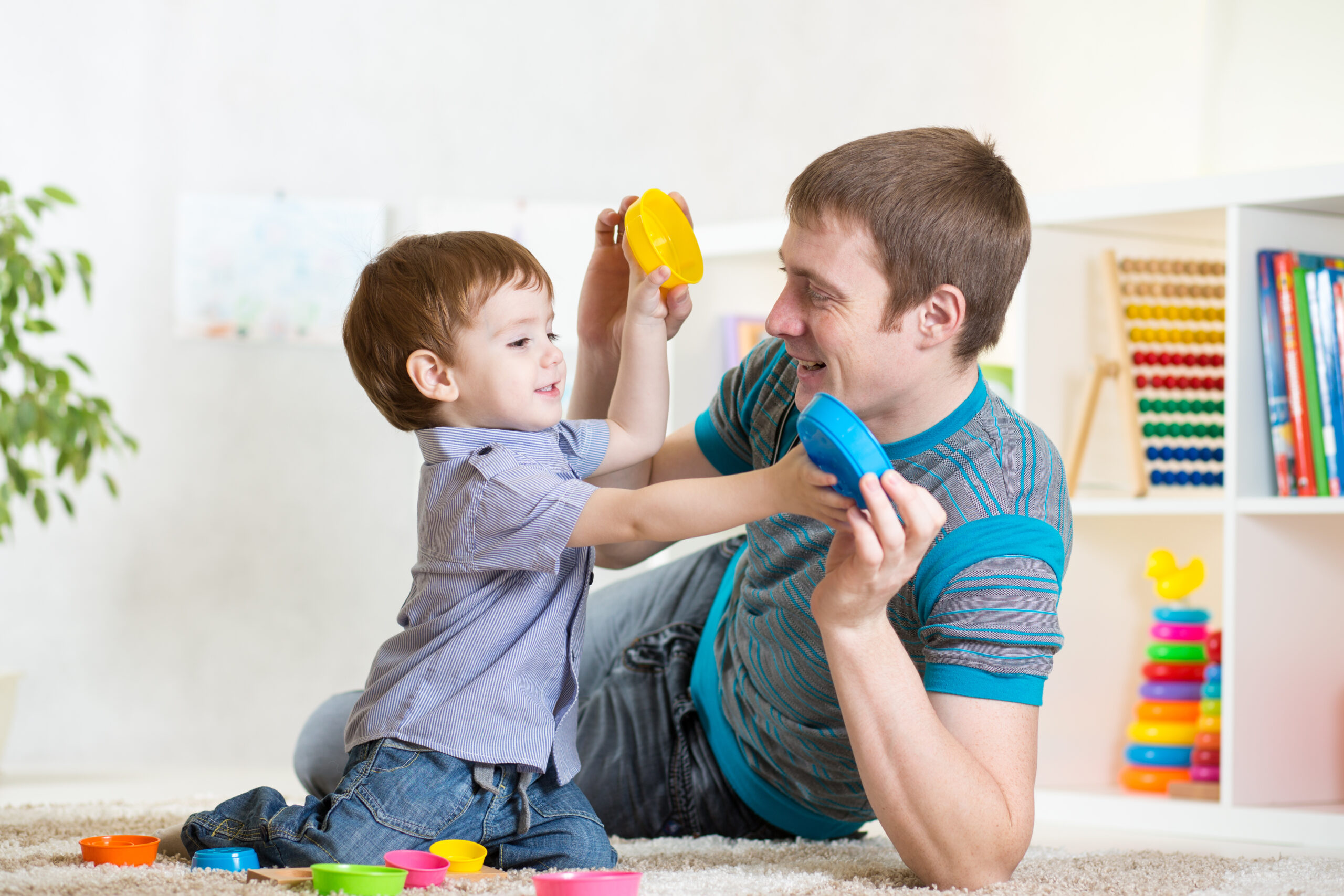
Floortime
consists of interactive 1-1 play sessions with your child (often, but not necessarily, on the floor) with relationship-building as the goal. The adult's interaction is sensitive and attuned to the child, AND a philosophy with a holistic relationship-based view of the human being, where feelings and emotionality are key.
What is DIRFloortime?
The DIRFloortime approach aims to build relationships through positive emotionality and interactive play sessions. It gives you a "map" for your child's development and a clear guide when you have lost your bearings because your child is behaving puzzlingly or not developing as expected.
DIRFloortime is a play therapy based on the child's developmental level and helps children with developmental disabilities or autistic behavior to develop.

The focus of DIRFloortime is to support the child's personality development as a whole person, so that he or she not can grow and learn not only intellectually, but can use his or her own strengths above all to overcome his or her challenges, i.e. we work from the "Inside Out".
 Miteinander spielen - früher und heute
'Früher haben Kinder viel mehr gespielt und man musste man sie ständig ermahnen, nach Hause zu kommen. Heute ist es umgekehrt, - sie nach draußen zu bringen. Als ich Kind war, waren wir immer draußen - fast bei jedem Wetter. Wir haben bekannte Spiele gespielt (Räuber und Gendarm, Fangen, Verstecken, Bäumchen-Bäumchen-wechsel-dich, Ballspiele), sind Rollschuh gefahren (Kür oder Wettlauf) und im Winter Schlitten, haben Mutter-Vater-Kind gespielt und waren dabei sehr, sehr kreativ, sind auf Bäume und über Zäune geklettert und haben Entdeckungen gemacht - und “ganz nebenbei” Sozialverhalten gelernt. Die älteren Kinder haben auf die kleineren aufgepasst, selbst Kinder im Kinderwagen waren dabei (auch wenn wir sie manchmal “vergessen” haben). “Wenn die Laternen angehen, müsst ihr zu Hause sein” - den Satz denke ich heute noch manchmal, wenn die Laternen angehen. There was only one television program. On Sundays, we listened to "Kalle Blomquist, the master detective" on the radio.
Renate Kuhn
Social pedagogue
Following the child's lead AND challenging them to climb the developmental ladder at the same time.
The basic building blocks for all learning processes, including language development, consist of the child's inner motivation and enjoyment of being with other people.
By Follow the child's natural emotional interests (i.e., let them take the lead), while challenging them at the same time using emotionality and playful interaction as well as "communication circles", we guide the child to relate and make increasing use of his social, emotional and intellectual abilities.

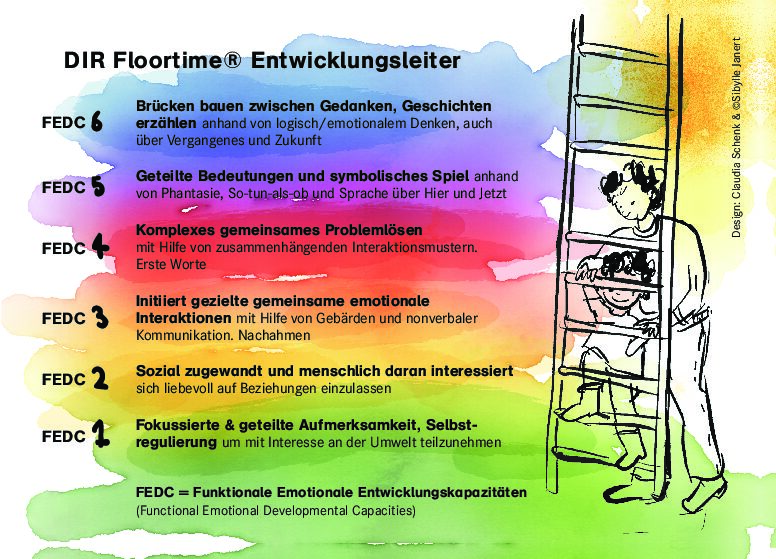
The developmental ladder is available for purchase as handy FEDC postcards, so you can always have it to hand, in your pocket, on your fridge, or shared with teachers or kindergarten for better orientation.
How is the DIR-Floortime approach different from behavioral training approaches (such as ABA)?
The DIR approach is fundamentally different from traditional behavioral therapies (such as ABA, applied behavior analysis). The latter are designed to produce behavioral change and to rehearse with the child a specific behavior that is determined by the adult, without paying attention to what is going on emotionally or internally in the child. In contrast, the multifaceted, holistic, and reflective DIR approach, first formulated by Dr. Stanley Greenspan, his wife Nancy and colleague Serena Wieder, focuses attention on the child's specific interests, sensory processing skills, and relationships, as well as our own personality and reactions to the child, and the family structure.
This positive, dynamic and playful approach allows us to redefine autism - as a developmental disorder with excellent prospects for growth and positive change. Using the DIR model, which describes the child's general mental-emotional development in terms of Functional Emotional Development Levels (FEDLs), brings light into the darkness of puzzling symptoms. This approach attempts to empathize with the child's world and to engage with them through their interests, drawing them into a shared world to help them climb the developmental ladder. In other words, it is about lovingly accepting your child at their current stage of development and encouraging their strengths, in order to help them develop their weaknesses.
The goals of the DIR approach are not primarily "autism-specific," but are the same goals that all parents want for their child: a stronger emotional bond, warm relationships with others, communication through gestures and intelligible speech, involvement in meaningful activities, etc. And it includes strategies, techniques, and activities to achieve these goals. After all, relational skills are the basic prerequisite for other cognitive, social, emotional, language, motor, and self-awareness skills to develop to their full potential.
